Roof repairs, solar panels and a home security system are usually treated as three separate projects, booked at three different moments whenever the budget allows. That is understandable, but it quietly creates one of the most common and most expensive mistakes in home improvement: installing solar panels on a roof that then needs work underneath them, or fitting cameras before the cable routes have been decided.
Bundling the work is not complicated. It simply means deciding the order in advance, then letting each stage support the next. This guide explains the sequence we use, the checks that matter at each step, and the questions worth asking before anybody climbs a ladder.
Start with the roof, because everything else sits on it
The roof is the part of the upgrade that cannot easily be revisited. A solar array is mounted on top of the covering, so if the covering has a limited life left, the panels will eventually have to come off to allow repairs — a job that costs more than the original installation in the worst cases. Before anything else, have the roof inspected properly: covering, fixings, flashing around chimneys and vents, guttering, downpipes and, where accessible, the structure beneath.
The inspection should answer two questions honestly. How much life is left in this roof, and is the structure sound enough to carry additional weight? If the answer to either is uncertain, resolving the roof first is the correct decision. It is worth doing the maths on that rather than assuming a quick patch will be enough, because the panels will be in place for a long time.
Fix water management while you are up there
Roof work is the ideal moment to correct the parts of a home that handle water, since access is already set up and the scaffolding or safety equipment is in place. Gutters that overflow, downpipes that discharge against the wall, valleys that trap debris and flashings that have cracked all cause interior damage eventually, and all are cheaper to put right now than to chase later.
It is also the best time to consider ventilation. Roof spaces that cannot breathe develop condensation, which in turn damages insulation and timber. Adding vents or improving airflow during roof work costs a fraction of doing it as a separate job, and it protects everything you are about to install beneath it.
Plan the solar array around the roof, not the other way round
Once the roof is sound, the array can be designed to suit it: the pitch, the direction the roof faces, the amount of shade from trees or nearby buildings, and the sightlines from the street. A slightly smaller array on the best-facing section will often outperform a larger one spread across surfaces that are shaded for part of the day, so it is worth accepting a bit less coverage in exchange for better placement.
Two practical details are easy to forget and expensive to retrofit. The first is cable routing: plan a neat, weather-sealed route from the roof down to the inverter position so that no cable is left draped across a wall. The second is where the inverter, isolators and monitoring equipment will live — ideally somewhere dry, ventilated and accessible, because you will need to reach them occasionally for inspections and maintenance.
Sequence is the cheapest upgrade available. Deciding the order of work in advance usually saves more money than shopping around for discounts.
Then design the security layer, with privacy in mind
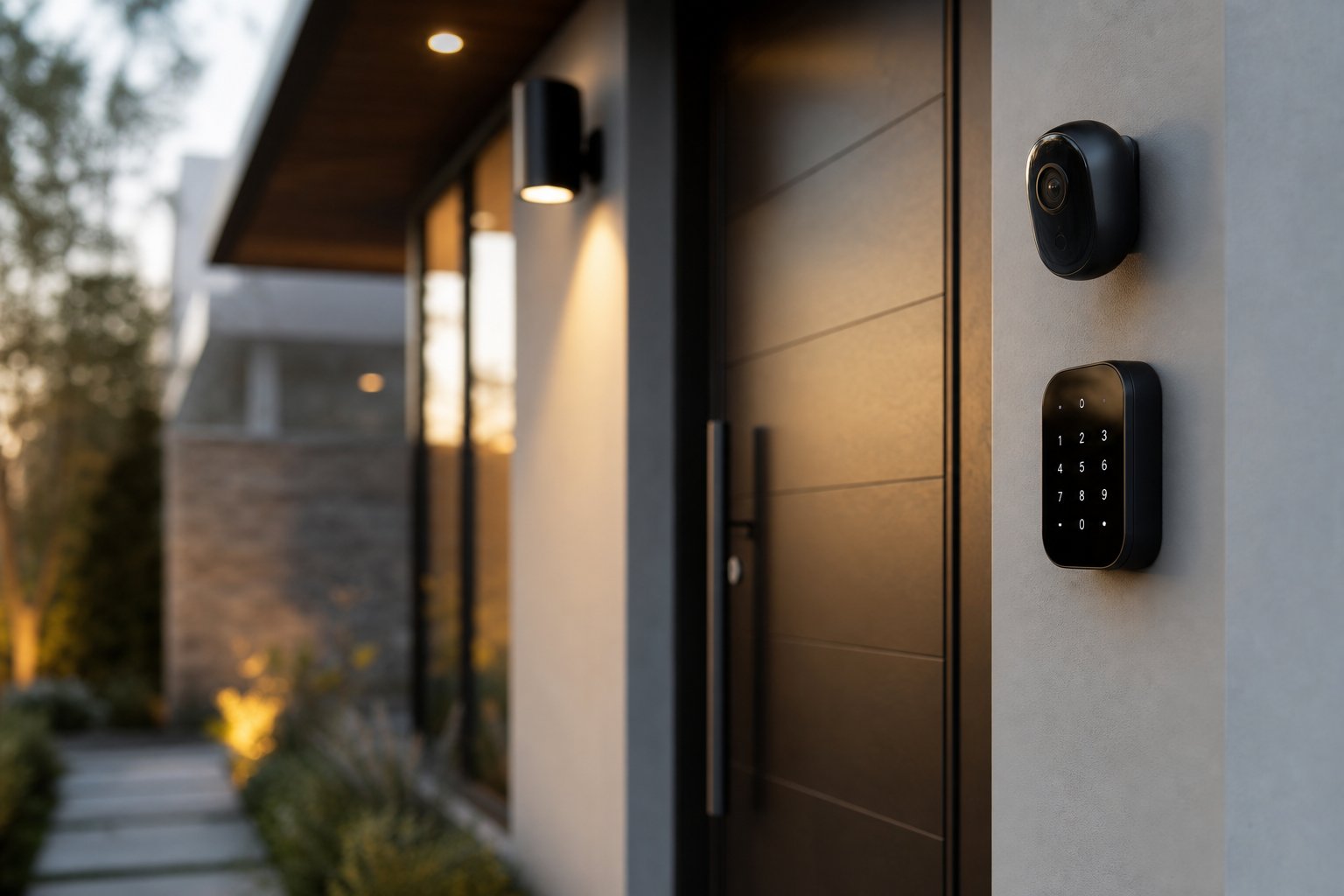
Security is best planned last, once the exterior works have established where the pipes, cables and access points sit. A sensible scheme covers the approach routes rather than every square metre of the property: the front door and the path leading to it, the side passage, the rear door, and any ground-floor window that is easy to reach from the street or a shared boundary.
Camera placement is a design decision as much as a technical one. A camera pointing directly into low sunlight will produce a useless image for part of every day, so angles should be chosen to avoid glare. Coverage should stop at your own boundary — recording a neighbour's window or a public pavement may raise privacy concerns and, in some places, legal ones. Where a system records footage, note where it is stored, who can access it and how long it is kept, and tell anyone who lives in or visits the property that cameras are in use.
Connect the safety work at the same time
Projects that reach the roofline and the wiring routes are a natural moment to review fire safety as well. Smoke and heat alarms can be positioned on each level with their interlinking planned properly, and any fire-resistant detailing around kitchens, flues or garages can be checked while trades are already on site. Adding a fire escape plan at the same time costs nothing and means the household knows what to do if an alarm sounds at night.
If the household includes anyone who would need assistance to leave quickly, the plan should be discussed with them specifically. General advice is useful, but a plan that only works for the fastest person in the house is not really a plan.
Test everything before the trades leave
Handover is where a well-sequenced project proves itself. Walk the roof from ground level and check that the lines are straight, the flashing is dressed neatly and no fixings are exposed. Ask for the array to be switched on and monitored while you are watching, so you can see the output registering. Then test the security system: arm it, trigger a sensor deliberately, view the app on your phone, and check that the lighting schedule behaves as expected after dark.
Finally, collect the paperwork in one place — warranty documents for the roof materials, the array and the security equipment, along with the maintenance notes for each. Keep the contact details for each component, because if something does need attention later, knowing who supplied it saves a great deal of time.
What a sensible sequence looks like
In short: inspect and repair the roof and its water management first, deal with ventilation and insulation while access is easy, design and install the array on a sound surface with tidy cable routing, then fit the security and safety systems around a settled exterior. Each stage is unremarkable on its own, but the order is what keeps costs down and avoids redoing work.
If you would like one team to assess all of it together — roof condition, solar potential, security coverage and fire safety — that is precisely the kind of combined survey we carry out. One visit, one written plan, and a schedule you can plan your household around.